
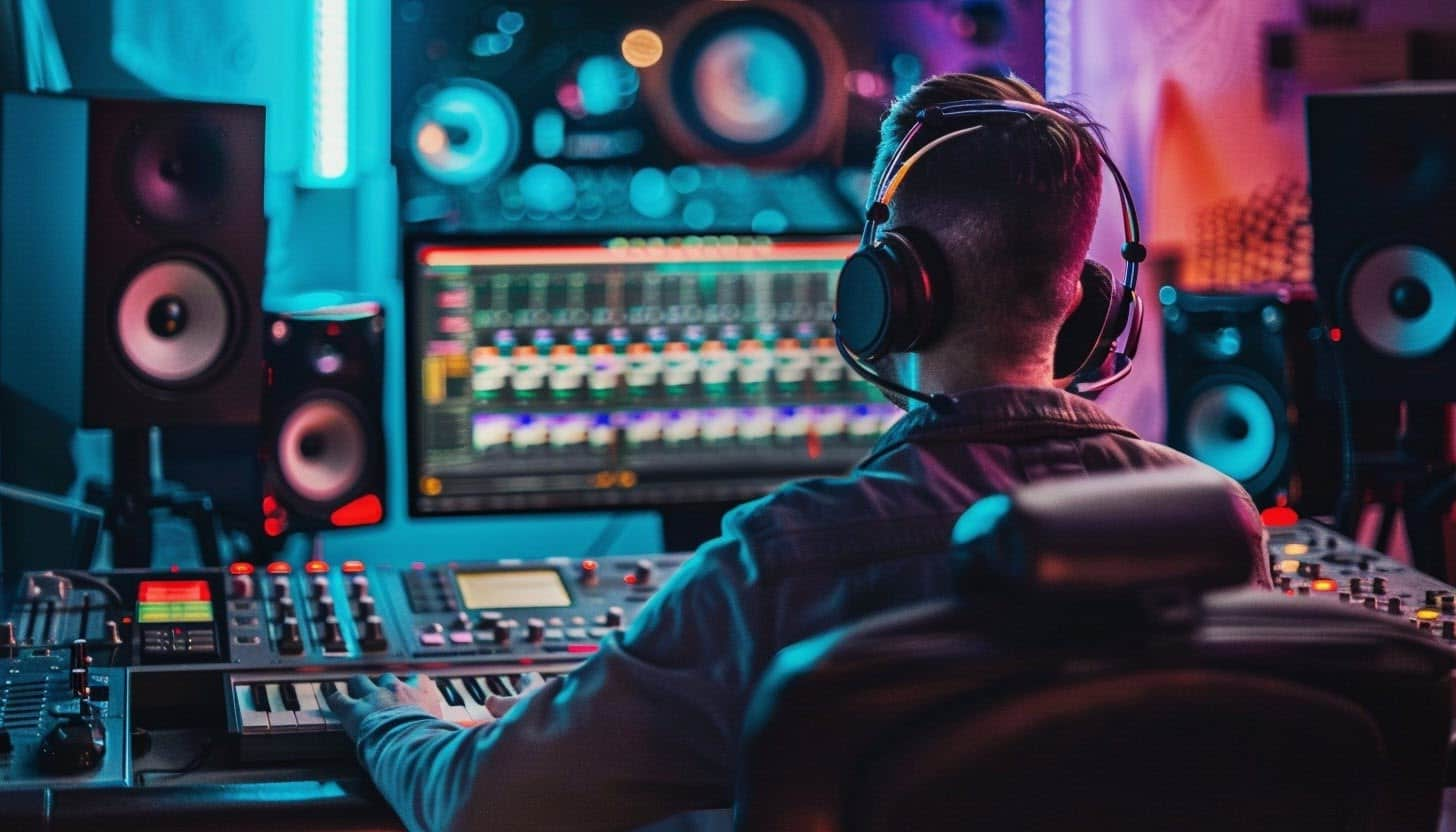

Electronic music has always thrived on the edge of innovation with turntables, samplers, drum machines and DAWs. So it’s no surprise that artificial intelligence is starting to take its place in the studio, not just as a tool, but as a creative partner.
AI in music production is not about robots taking over, it’s about collaboration. Today’s AI tools can generate melodies, suggest harmonies, remix tracks, or even improvise live. For producers, it’s like having a co-writer who never switches off, whilst also offering strange ideas you might never have considered, for better or worse.

But this raises questions, who owns the music when a machine helps write it? Can something be emotionally real if it’s partially algorithmic? And does creativity lose its meaning if it’s shared with a system trained on millions of other songs? Some artists see AI as a way to break habits, disrupting familiar workflows and injecting chaos into the creative process. Others worry it might flatten originality, pushing music toward patterns that already exist.

Still, electronic music has always played with identity – robotic voices, synthetic textures, anonymous producers. AI just adds another layer to that conversation. Maybe it’s not about replacing the human touch, but expanding it, using machines not to predict the next hit, but to explore the unexpected.
At its best, AI isn’t the artist. It’s the glitch in the loop, the surprise chord, the noise that forces you to listen differently. The future of music might not be fully human, but it will still be deeply personal.
 ratemyrave