
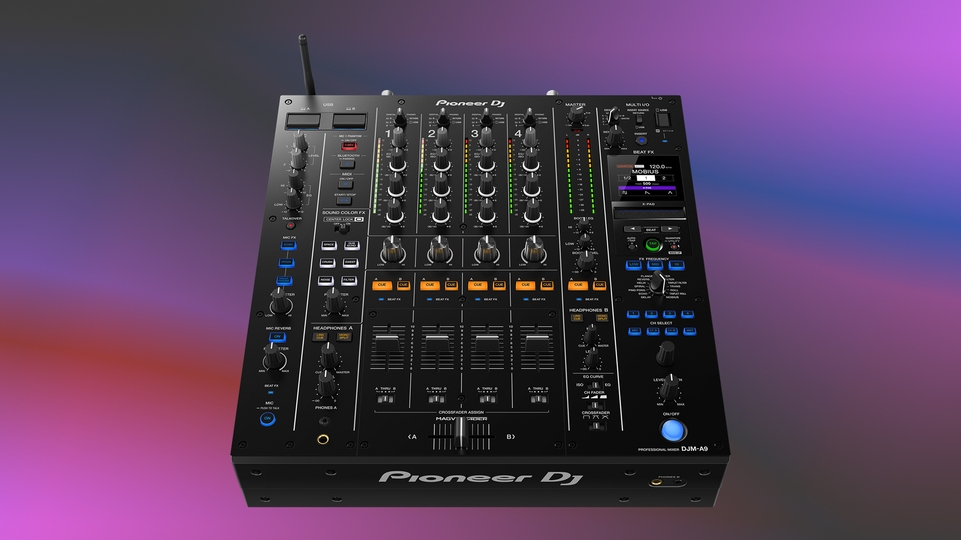

For decades, Pioneer have dominated DJ booths around the world with their club-ready series of mixers and CDJs. And for the last 12 years, the 900NXS and 900NXS2 have been pretty much the de facto mixer of choice for most DJs – arguably down to their plug and play appeal, inbuilt FX and worldwide availability.
Having replaced the CDJ 2000NXS2 with the 3000s, a mixer update was always on the cards. And this year, Pioneer officially discontinued the 900 series and released the the next generation, the DJM A9.
The A9 is not designed to replace or rival Pioneer’s other flagship mixer – the live performance oriented V10. The V10 is still firmly marketed toward a different demographic, with 6 channels, 4 band EQ, onboard compressor, and a long fader option – it’s not necessarily ideal for many home DJs. For the A9 though, it’s clear that they have borrowed many features making this a hybrid between the much loved 900NXS2 and V10.
Could this be the ultimate DJ mixer from Pioneer then?
What’s new?
Firstly, this mixer is huge! It’s 2.2kg heavier, 4cm taller, and 7.5cm wider than the 900NXS2, making room for a myriad of new features. The extra space is welcome, adding new options and making it easier to navigate the mixer.

The A9 has many connections, including dual cue, USB-A and USB-C enabling a plethora of extra devices to be added. While the A9 is compatible with Rekordbox and Serato out of the box, MIDI connectivity allows you to use many more programs, and Bluetooth is a great feature if you want to just put some music on without mixing! Wi-Fi is available too for using the stage hand app, which enables sound engineers to remote control the mixer.

The microphone section has been extended, with a slew of effects and 48v phantom power enabling condenser microphones to be connected, a boost for broadcast DJs or vocalists! With Pitch, Megaphone, Reverb and Echo – plus the ability to route the audio to Beat FX, you can now modulate vocals in a creative way.
The Sound Colour FX have also been updated on the A9, with “Center Lock” preventing you from going past 12 O’Clock on the filter, ideal if you’re a heavy user of this. Don’t worry, you can easily disable this with a click of a button. The FX section is broadly similar to the 900NXS2 and will feel instantly familiar, with Mobius, Triplet Filter, and Triplet Roll being added as new FX.
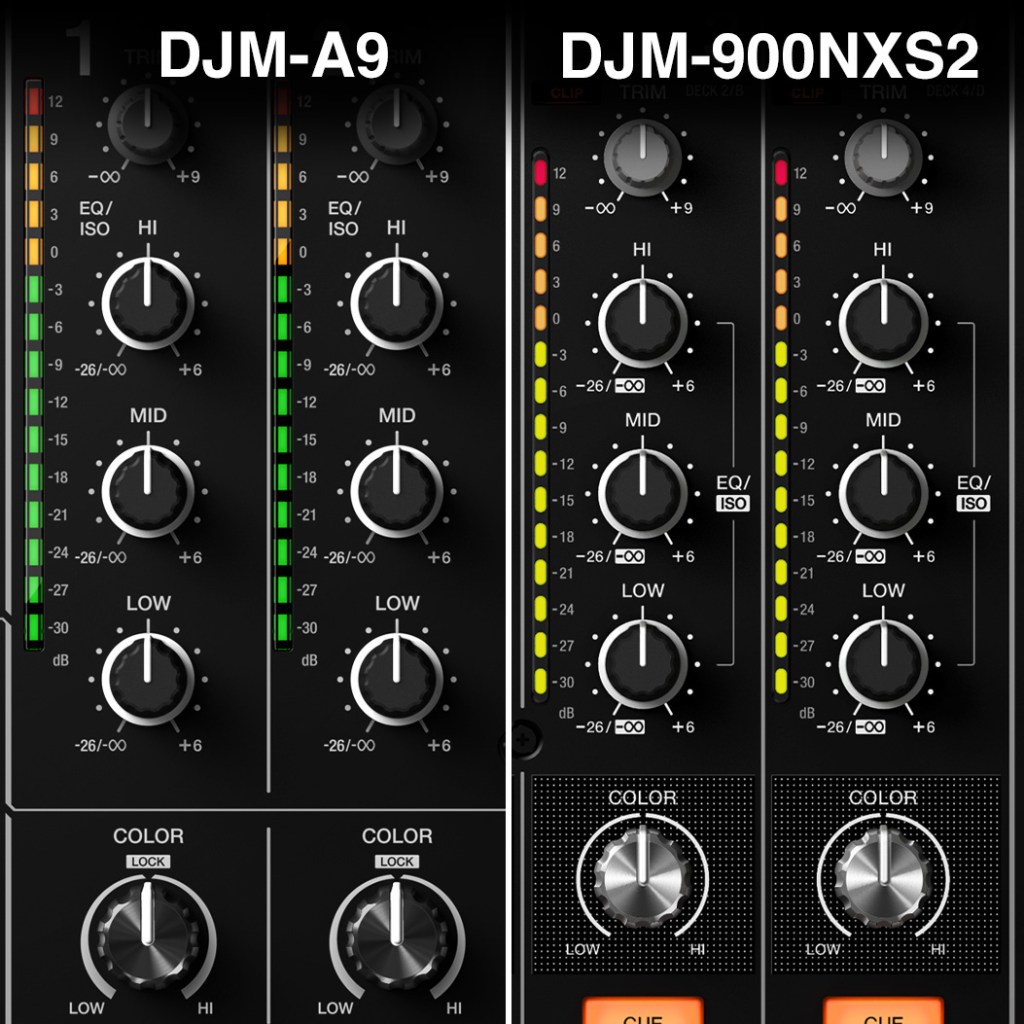
The sound quality has also been enhanced, with 32-bit float A/D converters taken from the DJM V10, a mixer recognised for it’s crystal clear output, showcasing even more sound detail.
Price: £2,469
Available: Now
Closest competitor: A&H Xone 96
In use
Out of the box, the first thing you’ll notice about this mixer is certainly its size, it is quite the beast but a far more familiar one than the V10 which can be quite intimidating at first glance. For users of virtually any other Pioneer DJM mixer, you’ll feel right at home using the A9.
The layout is instantly recognisable and you’ll be mixing fluently from the get-go. However, Pioneer have put the additional size of this new unit to good use, with noticeably more spacing between the EQs, making it easier to blend multiple frequencies and channels at the same time.

The next thing you’ll notice, is that it sounds fantastic. If there was anything the 900NXS2 needed, it was higher quality sound and that’s exactly what the A9 brings to the table making the lows feel much warmer and cleaner mids/highs.
Moving on to effects, the Sound Colour FX Center Lock is a really useful new feature and you’ll definitely miss it when using any other mixer. One thing we did notice is that this knob feels a tad more flimsy vs the 900NXS2, but there were no signs of it coming loose easily.
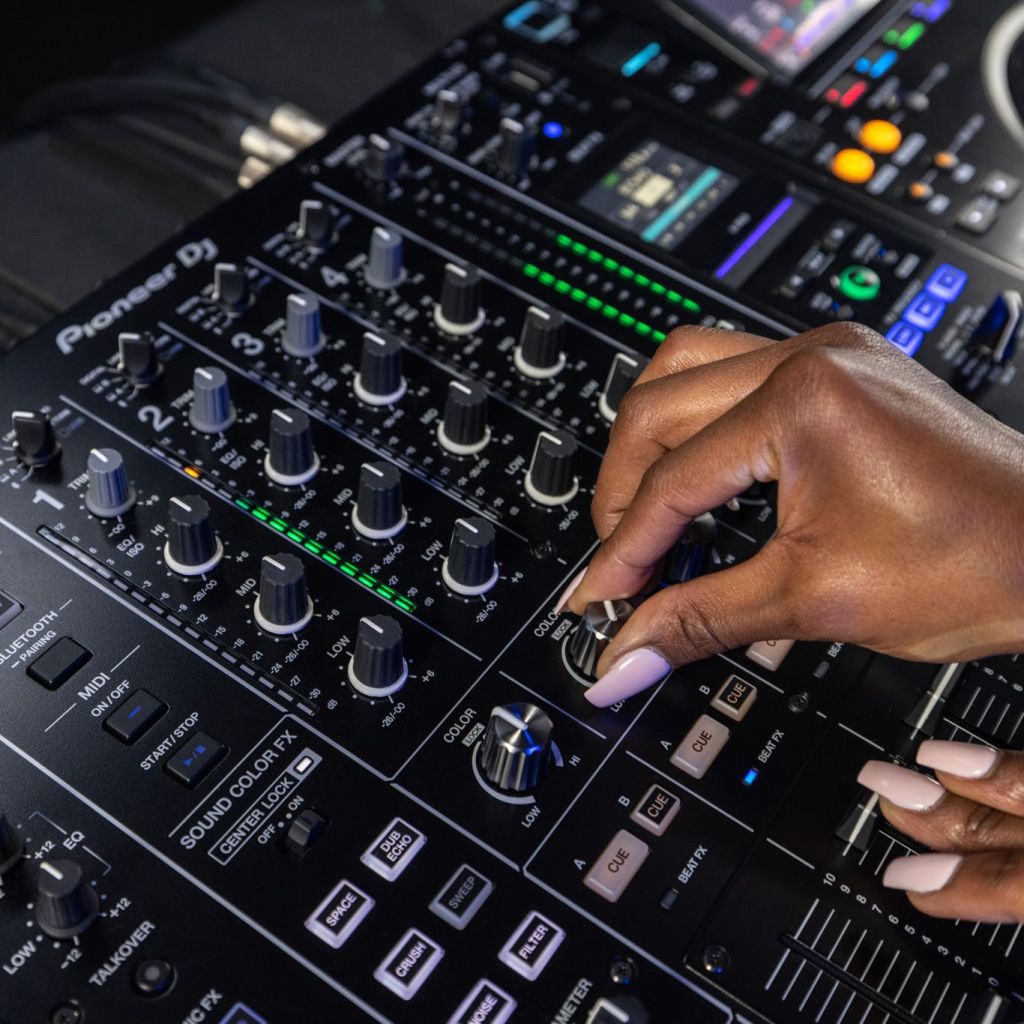
The new layout for assigning Beat FX to channels was certainly a welcome upgrade and makes it far easier to quickly switch between or know which channel has FX assigned. Gone are the days of getting your phone light out in a dark club or squinting to see which channel the knob was set to. The new light activated button for each channel make those woes of the past.
Of the three new FX, Mobius was our favourite which adds a nice whoosing sound best used on stripped back minimal techno tunes to add some drama in the breakdowns. We weren’t a fan of the new 1/3 and 2/3 beat settings on the echo which when cycling through at speed can make the effect sound out of time. You may be able to turn this off in the settings, but we couldn’t work out how.
The independent headphone outputs with dual cues on each channel made B2Bs a breeze, especially when paired with the CDJ 3000s touch preview feature, allowing you to listen further ahead in the tune playing, without it affecting the master output, or what the other DJ can hear in their headphones.

When it comes to connectivity, the A9 had everything we needed and more. In particular, the bluetooth feature which came in handy when there was a tune we wanted to play but neither of us had it downloaded. Simply hook up your phone, open Spotify and you’re away. The antenna did feel a little fragile and unstable though.
Summary
The A9 is the mixer all Pioneer DJs have been waiting for, with improvements which address virtually all of the 900 series previous issues, whilst building on its greatness and moving with the times. With better sound, layout and connectivity, this could likely be the ultimate digital mixer for DJs.
 ratemyrave